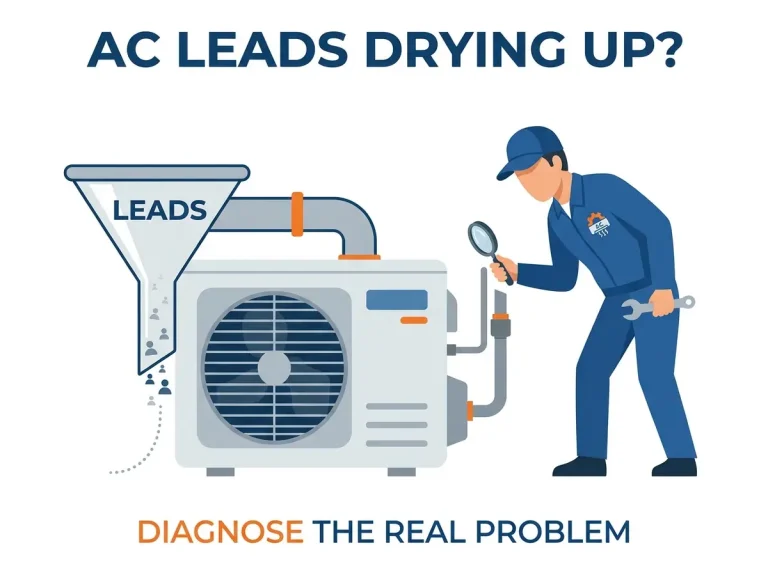

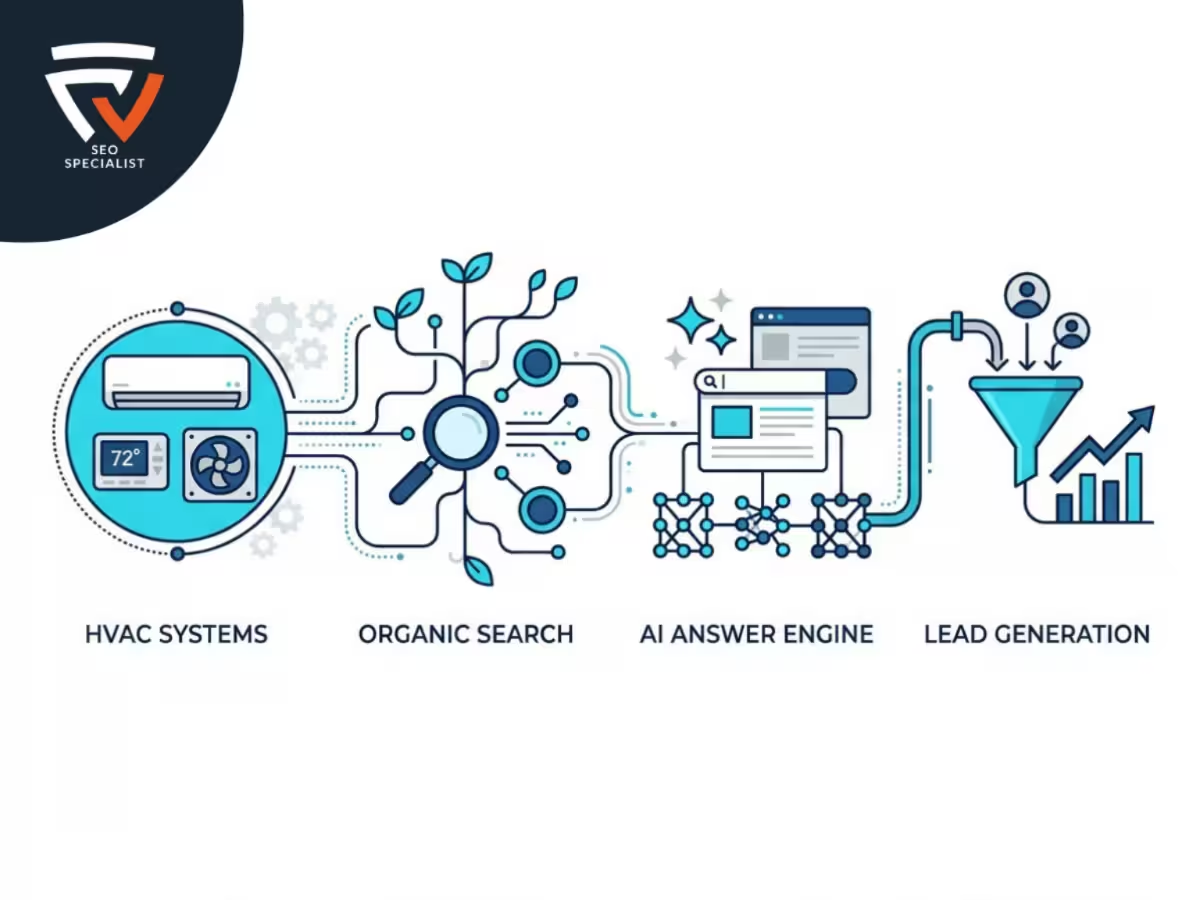
HVAC leads represent qualified consumer or commercial requests for heating, ventilation, and air conditioning installation, maintenance, or repair. While historically sourced from shared aggregator platforms and volatile paid auction clicks, sustainable enterprise acquisition now requires authoritative organic discovery: structuring machine-readable entity schemas, establishing verified Knowledge Graph associations, and publishing high-information-gain content that answer engines directly cite.
Customer acquisition costs across home and commercial climate services have hit an unsustainable ceiling. Across major global enterprise markets, digital ad auctions have driven digital media spend to record highs, while zero-click answer engines synthesize generic search queries without passing organic clicks downstream. CMOs, growth directors, and agency operators managing multi-territory HVAC footprints face a dual operational crisis: paid lead efficiency is eroding, while legacy SEO playbooks—built on keyword repetition, thin local doorway pages, and commoditised backlinks—are ignored by modern search architectures.
Relying on shared-lead brokers yields poor closing ratios and razor-thin margins. To build an organic pipeline that compounds over time, enterprises must treat HVAC leads not as disconnected transactions bought on an auction floor, but as the downstream outcome of an engineered, machine-readable digital ecosystem.
When your digital assets are mapped to explicit semantic entities and calibrated for generative search extraction, your brand transitions from competing in auction price wars to becoming the definitive, AI-cited authority in your operating territories.
1. The Anatomy of Modern Search: Why Legacy HVAC Lead Strategies Fail
The fundamental architecture of organic discovery has shifted from lexical string matching to semantic entity resolution. Search systems no longer simply parse a web page for the string phrase “commercial HVAC repair”. Instead, they evaluate an enterprise’s presence within a global Knowledge Graph, assessing entity salience, authoritative citations, and verifiable service capabilities.
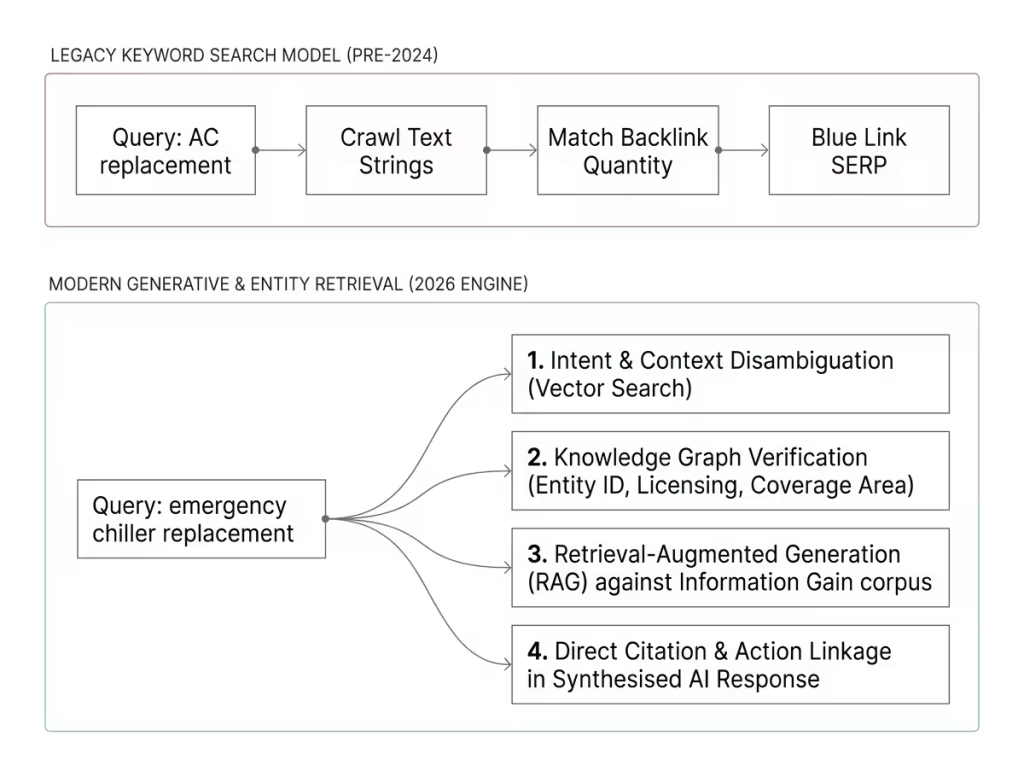
Under this modern framework, traditional tactical shortcuts collapse:
- Information Gain Deficits: Generative engines evaluate pages against existing indexed content. Pages recycling generic maintenance checklists earn a near-zero Information Gain Score, which results in suppression from synthesis blocks in Google AI Overviews, Perplexity, and conversational agents.
- Disconnected Semantic Triples: Search engines parse entities as relational triples: [Subject] -> [Predicate] -> [Object] (e.g., [Acme Thermal Ltd] -> [providesCommercialService] -> [Data Centre Precision Cooling]). If your underlying markup fails to explicitly define these relationships, answer engines will not cite your business when users submit high-intent, conversational queries.
- Shared Lead Cannibalisation: Purchasing shared form leads places your intake team in a simultaneous race against four competitors. By engineering an authoritative organic engine, every generated call and enquiry is 100% exclusive, pre-qualified by your content architecture before contact occurs.
2. Unit Economics: Comparing Acquisition Channels
To understand the financial defensibility of modern organic architecture, marketing leadership must examine the entire funnel economics of customer acquisition channels.
| Acquisition Channel | Typical Cost per Touchpoint | Lead Exclusivity | Conversion to Scheduled Job | Organic Equity & Defensibility |
| Shared Aggregator Forms | $45 – $80 per shared lead | Non-exclusive (3–5 vendors) | 8% – 15% | Zero (Ongoing dependency) |
| Paid Search Auctions (PPC) | $90 – $260 per click | Exclusive | 14% – 24% | Zero (Traffic halts when budget ceases) |
| Traditional Local SEO | Low marginal cost | Exclusive | 18% – 32% | Moderate (Vulnerable to AI Overviews) |
| Enterprise AEO & Entity Systems | Minimal marginal cost | 100% Exclusive | 34% – 52% | High (Compounding knowledge graph presence) |
While building dedicated semantic infrastructure requires upfront capital and architectural rigor, the blended CAC decreases over time. A verified brand recognized as a regional entity builds a defensive moat that paid media bids cannot replicate.
3. The 4-Pillar Organic Engine for Qualified Inbound HVAC Leads
Capturing high-value installations, multi-site retrofit contracts, and emergency repair requests requires orchestrating four core technical disciplines.
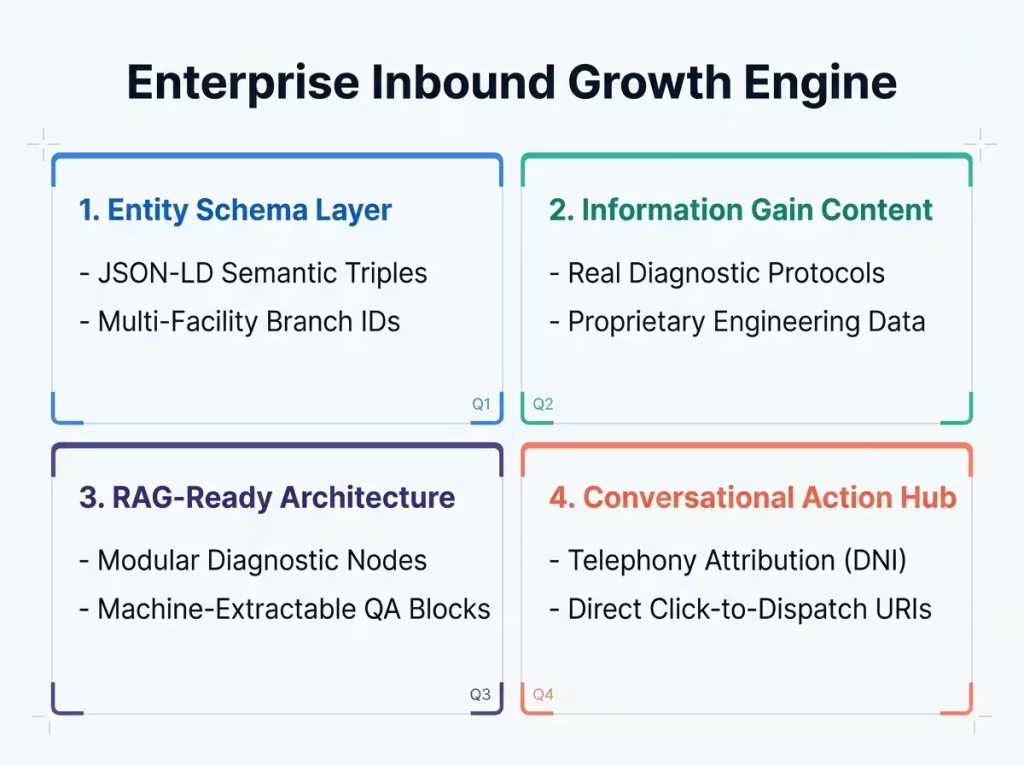
Pillar 1: Advanced Semantic Entity Architecture
Every service location and functional specialty must be machine-readable. Standard local schema is insufficient for multi-territory or enterprise-scale providers.
- Implement nested HVACBusiness schemas linked to primary parent entities using explicit @id canonical nodes.
- Define exact territorial limits using serviceArea nodes containing GeoJSON coordinates or authoritative GeoShape definitions rather than ambiguous lists of town names.
- Declare validated certifications, manufacturer master-technician statuses, and regulatory licenses using hasCredential properties to feed algorithmic trust calculations directly.
Pillar 2: High Information-Gain Content Architecture
To win placement in generative answer engine summaries, content must introduce novel, empirical data that cannot be synthesized from basic training sets:
- Diagnostic Engineering Guides: Instead of publishing generic articles explaining “why your AC is making noise,” deliver precise decibel benchmarks, refrigerant pressure variance tables, and compressor capacitor tolerance specs.
- Real-World TCO Models: Publish total-cost-of-ownership data comparing variable refrigerant flow (VRF) systems against rooftop packaged units across distinct architectural profiles.
- Transparent System Schematics: Provide structured, step-by-step diagnostic workflows that AI engines can extract as multi-part solutions when answering conversational queries.
Pillar 3: Retrieval-Augmented Generation (RAG) Layout Optimization
AI agents scan content in chunks, extracting factual pairings to answer conversational user prompts. If an answer is buried in dense, decorative prose, extraction confidence drops below minimum retrieval thresholds.
- Use direct semantic heading structures (H2: Diagnostic, H3: Mechanical Resolution).
- Place definitive Direct Answer Snapshots of 40–60 words immediately beneath section headings to maximize capture by answer engine extraction models.
- Use clean Markdown tables for multi-variable mechanical comparisons, equipment specifications, and efficiency ratings (SEER2/COP).
Pillar 4: Frictionless Conversion and Telephony Integration
When dealing with urgent residential equipment failures or commercial chiller breakdowns, the conversion path must be instant:
- Integrate programmatic Dynamic Number Insertion (DNI) across landing assets to tie incoming calls back to the specific entity content node that drove the discovery.
- Deploy localized click-to-call links wrapped in clean semantic tags (itemprop=”telephone”) to accelerate mobile conversion.
- For enterprise organizations looking to build out this multi-layered framework, leveraging an end-to-end specialized SEO service provides the structured technical foundation, entity mapping, and ongoing authority building required to scale organic pipeline reliably.
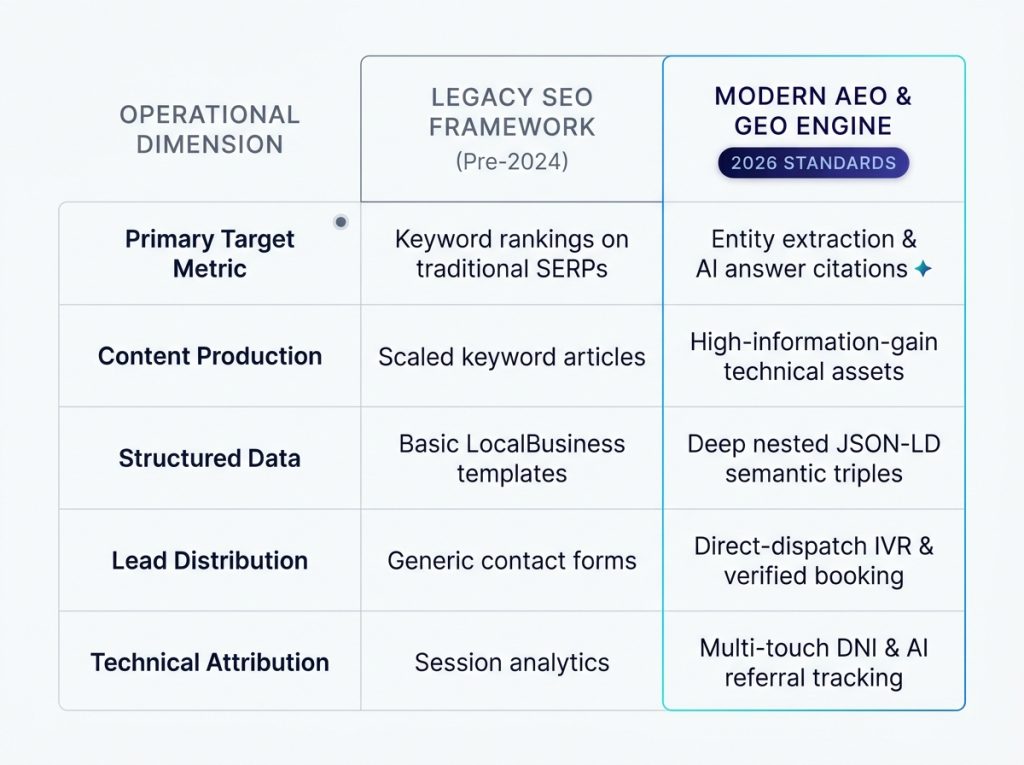
4. Operational Playbook: Legacy SEO vs. Modern AEO Framework
Transforming your inbound pipeline requires systematic shifts across every layer of your growth marketing stack:
Strategic Execution: Agency-Scale Delivery
Scaling this architecture across hundreds of regional locations or service verticals requires substantial operational bandwidth. When internal teams face capacity limits while managing day-to-day operations, working with an experienced white-label digital marketing infrastructure partner allows agencies and enterprise operations to deploy standardized technical workflows, high-velocity entity schemas, and authority-building campaigns seamlessly under their own brand flag.
5. Frequently Asked Questions
What distinguishes organic HVAC leads from purchased platform leads?
Organic HVAC leads originate from high-intent consumers who discover and contact your enterprise directly through organic search results, local map packs, and AI answer engines. Unlike purchased aggregator leads that are simultaneously distributed to multiple competitors, organic leads are completely exclusive, resulting in higher appointment setting and close rates.
How does Generative Engine Optimization (GEO) generate HVAC leads?
GEO aligns your digital assets with the retrieval mechanics of AI engines such as Google AI Overviews, Perplexity, and ChatGPT. By embedding verifiable entity schema markup, maintaining consistent semantic citations, and publishing authoritative, empirical technical data, answer engines recommend and link directly to your business when users search for local heating and cooling solutions.
Why is structured schema markup critical for HVAC lead generation?
Structured schema markup translates your business details, operating hours, emergency services, geographic coverage areas, and technical certifications into standardized JSON-LD code. Search engines and AI crawlers read this structured data to verify your operational legitimacy and service footprint, directly influencing your inclusion in localized generative answer boxes.
What is the most effective KPI to measure modern HVAC search performance?
The most reliable KPI for modern HVAC organic performance is Qualified Inbound Call Volume and Booked Revenue by Entity Node, rather than superficial keyword rankings. Measuring verified inbound telephone interactions that exceed sixty seconds isolates genuine consumer intent from web crawler traffic and low-value inquiries.
Modernize Your Inbound Lead Architecture
Continuing to rely on rented audiences, escalating ad auctions, and low-intent shared forms leaves your operating margins vulnerable. Sustainable, predictable business growth demands a defensible acquisition asset—an engineered, entity-based search foundation built for how prospective customers search today.
Ready to build an enduring organic customer pipeline?
Contact our team to request a comprehensive AEO Opportunity Audit and discover how modern search systems can lower your acquisition costs while driving qualified inbound demand at scale.