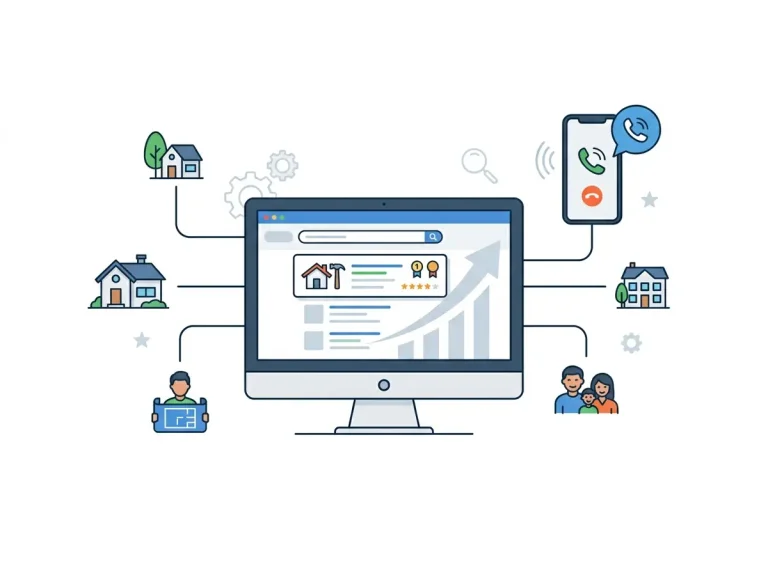
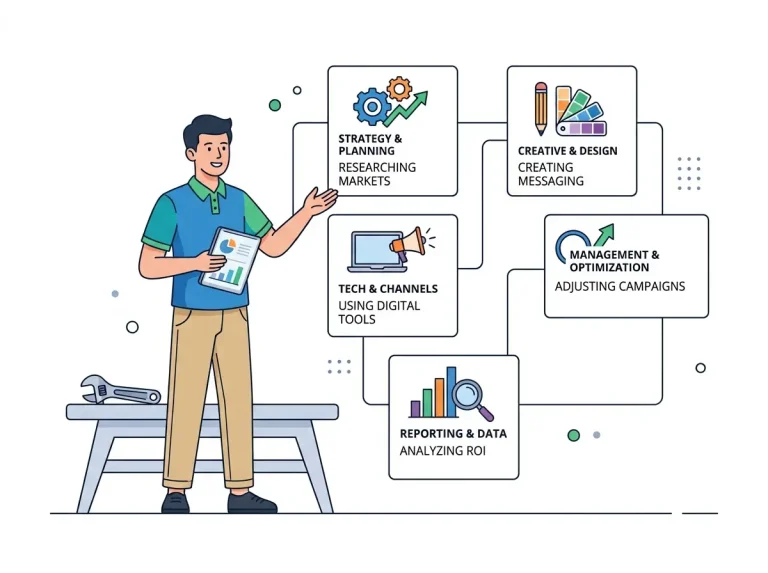
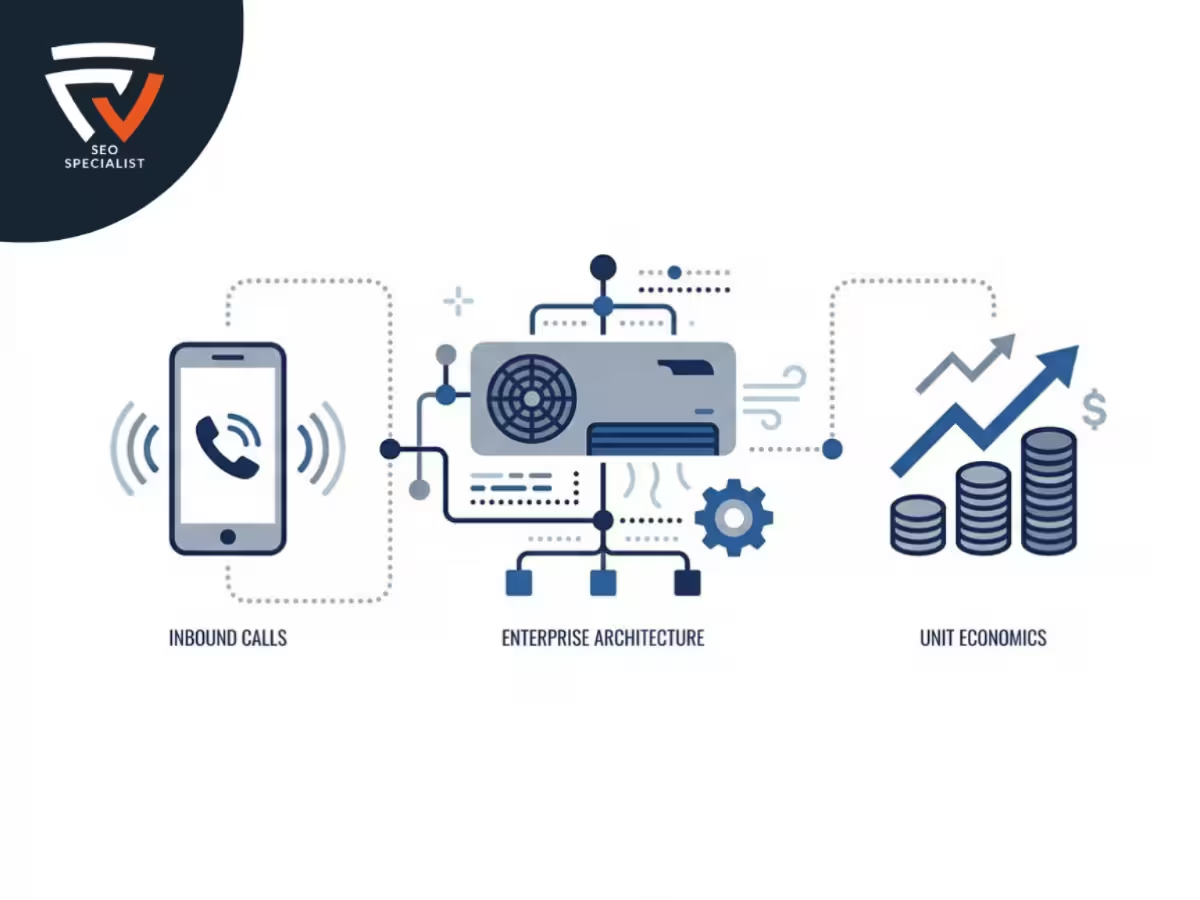
HVAC pay per call is a performance-based customer acquisition model where businesses purchase verified, inbound telephone inquiries from high-intent consumers actively seeking heating, ventilation, and air conditioning repair or replacement. Unlike static web form leads, pay per call links costs strictly to prequalified live interactions that exceed predetermined buffer durations (typically 60 to 120 seconds).
Paid customer acquisition in the home services industry is facing structural margin compression. Across global markets, paid search ad auctions continue to yield higher cost-per-click rates while Google AI Overviews and answer engines capture top-of-funnel informational queries. Marketing executives, growth directors, and enterprise operators managing multi-territory HVAC operations can no longer afford to burn capital on standard web form fills that sit in an outbound sales queue for twenty minutes before going cold.
Legacy customer acquisition playbooks rely on shared-lead brokers or unverified display clicks. These mechanisms generate bloated cost-per-acquisition (CPA) figures and dismal operational closing rates. To build a defensible growth pipeline, modern enterprises are restructuring their distribution around HVAC pay per call ecosystems. When synchronized with advanced technical optimization, localized entity authority, and modern generative search indexing, pay per call transforms from a raw media-buying line item into an agile inbound demand engine.
1. Deconstructing the Mechanics of HVAC Pay Per Call
At an enterprise level, pay per call is an architectural inbound system governed by real-time validation protocols, programmable telephony logic, and strict call-qualification rules.
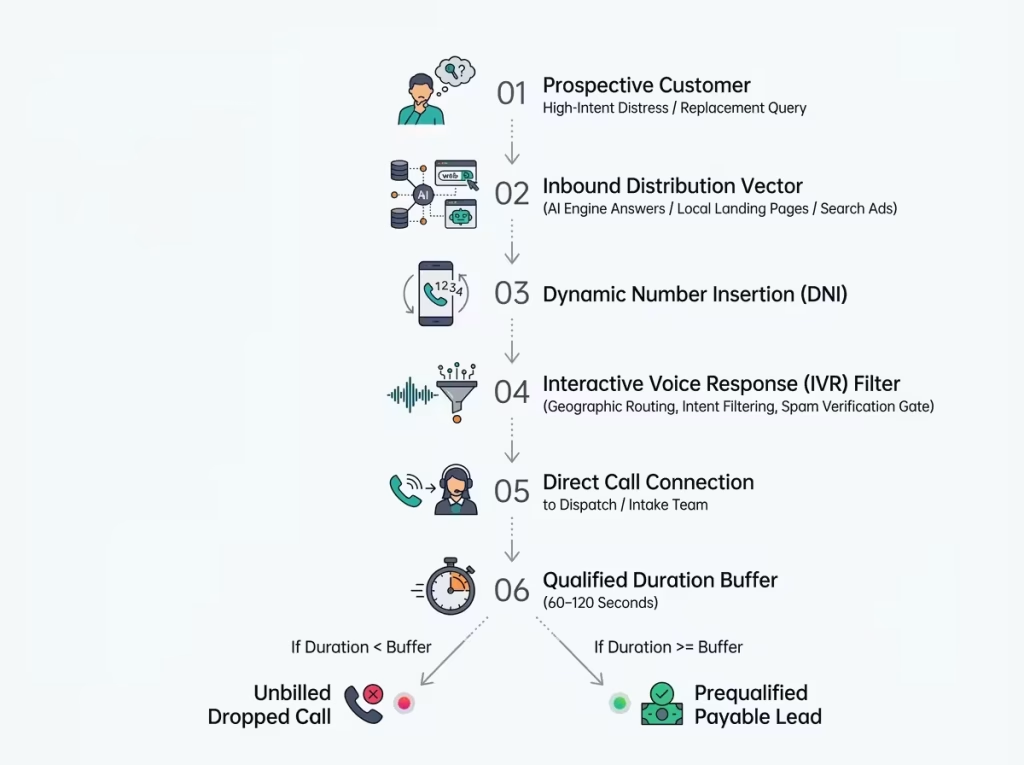
Key Structural Variables
- Qualified Duration (The “Buffer”): Enterprise call campaigns enforce a billing threshold—typically 60 to 120 seconds. This window filters out wrong numbers, automated spam, immediate misdials, and non-serviceable customer requests before any financial liability occurs.
- Interactive Voice Response (IVR) Segmentation: Automated telephony flows immediately qualify geographic location, service type (emergency repair vs. comprehensive system installation), and property ownership status (residential vs. commercial).
- Dynamic Number Insertion (DNI): Enterprise attribution platforms dynamically swap phone numbers on digital landing assets to track individual sessions, keyword origins, and generative answer referral sources down to the exact recording and transcript.
- Concurrency and Cap Management: Intelligent routing mechanisms throttle incoming call volume based on current field technician availability and physical call center staffing, preventing abandoned calls during unexpected demand spikes.
2. Unit Economics: Pay Per Call vs. Shared Form Submissions
Acquiring inbound home services customers requires precision analysis of the entire intake funnel. Evaluating performance solely on front-end “cost per lead” creates a distorted perception of profitability.
| Metric / Attribute | Shared Form-Fill Inquiries | Traditional PPC Web Traffic | Inbound HVAC Pay Per Call |
| Typical Upfront Unit Cost | $30 – $65 | $75 – $210 (per click) | $90 – $240 (per qualified call) |
| Exclusivity | Shared with 3–5 competitors | Exclusive to your property | 100% Exclusive (Direct Line) |
| Contact / Connection Rate | 22% – 38% | 8% – 16% (Landing page rate) | 100% (Consumer on live line) |
| Speed-to-Lead Variable | High friction (Requires callback) | Moderate (Requires form review) | Zero friction (Immediate triage) |
| Qualified Lead-to-Close Rate | 8% – 14% | 12% – 22% | 35% – 58% |
| Blended Customer Acquisition Cost | High (due to attrition) | Variable / High | Optimized / Defensible |
While the upfront cost of a live telephone call appears higher on an invoice than an unverified web form, the down-funnel economics tell a different story. In emergency HVAC situations—such as a central heating failure during sub-zero temperatures or a total chiller breakdown in commercial premises—the consumer does not wait for a callback. The company that answers the phone secures the dispatch.
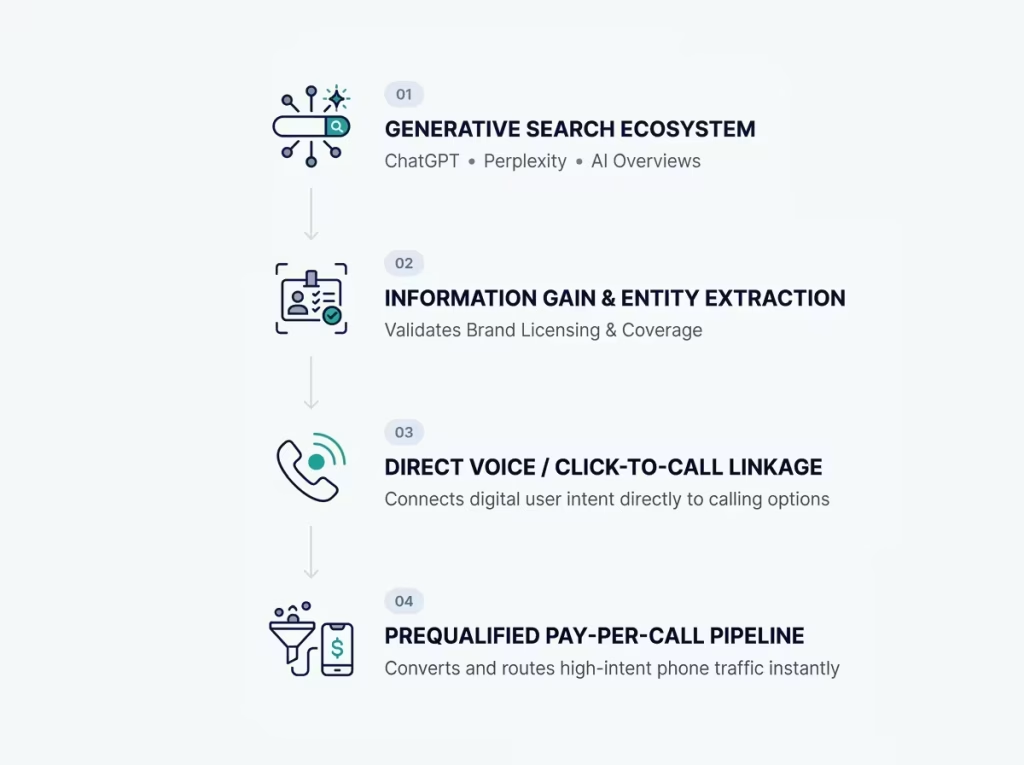
3. The 2026 Shift: Generative Search, AEO, and Voice-Driven Inbound Discovery
Search behavior has fundamentally evolved. Consumers no longer search solely through static desktop search bars using disjointed keywords like “furnace fix near me”. They prompt voice-activated devices, consult multimodal AI systems, and read synthesis boxes in conversational platforms.
Generative Engine Optimization (GEO) for Telephony
When answer engines synthesize local service options for high-intent queries, their underlying Large Language Models (LLMs) and retrieval-augmented systems assess Entity Salience and verified trust metrics. If an HVAC brand lacks clear structural associations in machine-readable knowledge graphs (e.g., structured Schema markup detailing physical premises, verified technicians, bonded insurance, and authoritative local business data), AI systems will simply bypass the brand when delivering natural language recommendations.
To capture inbound call volume from next-generation platforms:
- Encode High-Density Entity Schema: Implement detailed HVACBusiness, ServiceArea, and ContactPoint structured data that explicitly states live customer dispatch channels.
- Optimize for Conversational Prompts: Build authoritative informational assets addressing specific heating and cooling diagnoses (e.g., error codes, capacitor failures, refrigerant leaks) to capture top-of-funnel AI citations that funnel directly into click-to-call actions.
- Align Cross-Channel Paid Architecture: Dynamic telephony must work in tandem with search engine marketing. If you are refining how your paid media assets convert high-intent inbound searchers into live calls, review our advanced blueprint for scaling high-intent Google Ads infrastructure to establish predictable multi-channel attribution.
4. Architectural Implementation: The 5-Stage Deployment Framework
Deploying an enterprise-grade pay per call acquisition pipeline requires a structured technical foundation to avoid wasted budget and operational bottlenecks.
Step 1: Telephony Stack & Routing Integration
- Deploy enterprise call tracking and routing software (such as Invoca, CallRail, or Ringba).
- Implement Interactive Voice Response (IVR) decision trees to isolate residential emergency repairs from commercial maintenance or vendor inquiries.
- Configure regional call forwarding based on inbound caller ID prefixing and immediate dispatch availability.
Step 2: Quality Filtering & Fraud Mitigation
- Set strict billing buffers: 90 seconds for major metropolitan areas; 60 seconds for regional zones.
- Integrate automated caller-ID lookup (CNAM) and carrier verification to instantly terminate robocalls and high-frequency spoofed numbers before the buffer begins.
- Establish clear dispute protocols with performance media publishers covering dropped lines, out-of-coverage calls, and unserviceable requests.
Step 3: Localized Landing Architecture & AEO Integration
- Construct ultra-fast, mobile-first single-service landing pages focused on a single action: initiation of a live call.
- Integrate Click-to-Call buttons with structured schema markup (tel: URI protocols accompanied by ContactPoint structured data).
- Embed diagnostic FAQs using clear question-and-answer semantic formats to enable direct retrieval by LLMs and answer engines.
Step 4: Dispatch Calibration and Sales Intake Protocol
- Standardize intake call scripts: dispatch representatives must focus on securing the technician booking rather than quoting uncertain repair pricing over the phone.
- Integrate telephony back-ends directly into home services enterprise software (such as ServiceTitan or FieldEdge) to measure cost-per-scheduled-appointment in real time.
Step 5: Post-Call Transcription and AI Quality Auditing
- Ingest recorded calls into automated conversational intelligence systems.
- Transcribe and analyze calls for sales performance, service-to-objection ratios, and technician scheduling rates.
- Leverage transcription data to identify emerging service issues across operating territories, updating website entity content accordingly.
5. Navigating Common Pitfalls in Performance Call Marketing
Achieving sustained return on investment requires recognizing where traditional pay per call arrangements break down:
- Treating Call Centers as Cost Centers: Directing high-intent, premium inbound calls to an untrained answering service destroys campaign efficiency. If the initial representative cannot access dispatch schedules to book appointments immediately, conversion rates collapse by more than 40%.
- Ignoring the “Ghost Call” Phenomenon: Working with low-tier lead networks frequently results in calls generated via deceptive click-to-call display placements or misleading promotions. Insist on full publisher transparency and detailed conversion click-to-ring logs.
- Failing to Reconcile Disputed Calls Systematically: Never treat invoice reconciliation as an afterthought. Regularly audit short-duration calls, out-of-footprint inquiries, and automated IVR drops to recover ad spend credits from your media partners.
6. Frequently Asked Questions
What constitutes a billable call in an enterprise HVAC pay per call campaign?
A billable call is an exclusive, inbound connection from a unique consumer within your designated geographic service territory that remains connected beyond a pre-negotiated duration buffer (typically 60 to 120 seconds). Any call that terminates before this threshold—or is flagged by automated telephony systems as a duplicate, wrong number, or sales call—is non-billable.
How do modern AI answer engines impact pay per call volume?
Generative answer engines prioritize direct, high-utility solutions for urgent user inquiries. When your brand maintains authoritative entity signals, validated schema markup, and robust conversational content, AI engines cite your company in conversational recommendations and local summary cards. This process channels high-intent users directly to click-to-call mobile touchpoints.
What is the ideal buffer duration for emergency HVAC service calls?
For emergency residential heating and air conditioning repair, standard industry buffers sit between 60 and 90 seconds. This provides dispatch teams sufficient time to confirm the consumer’s location, assess the issue, and confirm dispatch availability while ensuring payments are tied exclusively to genuine, high-intent prospective customers.
How does Dynamic Number Insertion (DNI) integrate with local SEO?
DNI uses client-side JavaScript to display unique tracking numbers to individual website visitors without altering your underlying canonical NAP (Name, Address, Phone Number) data. Search engine bots and citation crawlers continue to read your consistent, primary business telephone number in the static HTML and schema code, safeguarding your organic local entity rankings.
Transform Your Inbound Customer Acquisition
Relying on outdated, low-intent form fills leaves your operational capacity vulnerable to unpredictable lead flow and shrinking margins. Building a resilient, high-converting customer pipeline demands a synchronized acquisition strategy—one that unifies real-time telephony, rigorous unit economics, and advanced search entity visibility.
Our team builds sophisticated search and inbound acquisition frameworks designed to scale enterprise service organizations.
Ready to modernize your organic and performance-based acquisition systems?
Book an Inbound Growth Strategy Session with our technical strategists to audit your current search architecture, calibrate your acquisition economics, and unlock sustainable pipeline expansion
or Call us at +63 966 6337 049